

- Converse is a wholly owned subsidiary with 100% ownership held by Nike, Inc., meaning there are no public shareholders, minority investors, or independent equity holders at the Converse brand level.
- All ownership rights, voting power, and strategic authority over Converse rest entirely with its parent company, while Converse itself does not issue shares or trade publicly.
- Nike’s full ownership structure allows Converse to operate with creative autonomy in products and branding, while major financial and strategic decisions remain centrally controlled by the parent company.
Converse is owned by Nike, Inc. Nike acquired 100% of the company in September 2003 after agreeing to purchase all Converse equity for $305 million in cash. Converse has remained a wholly owned Nike subsidiary ever since.
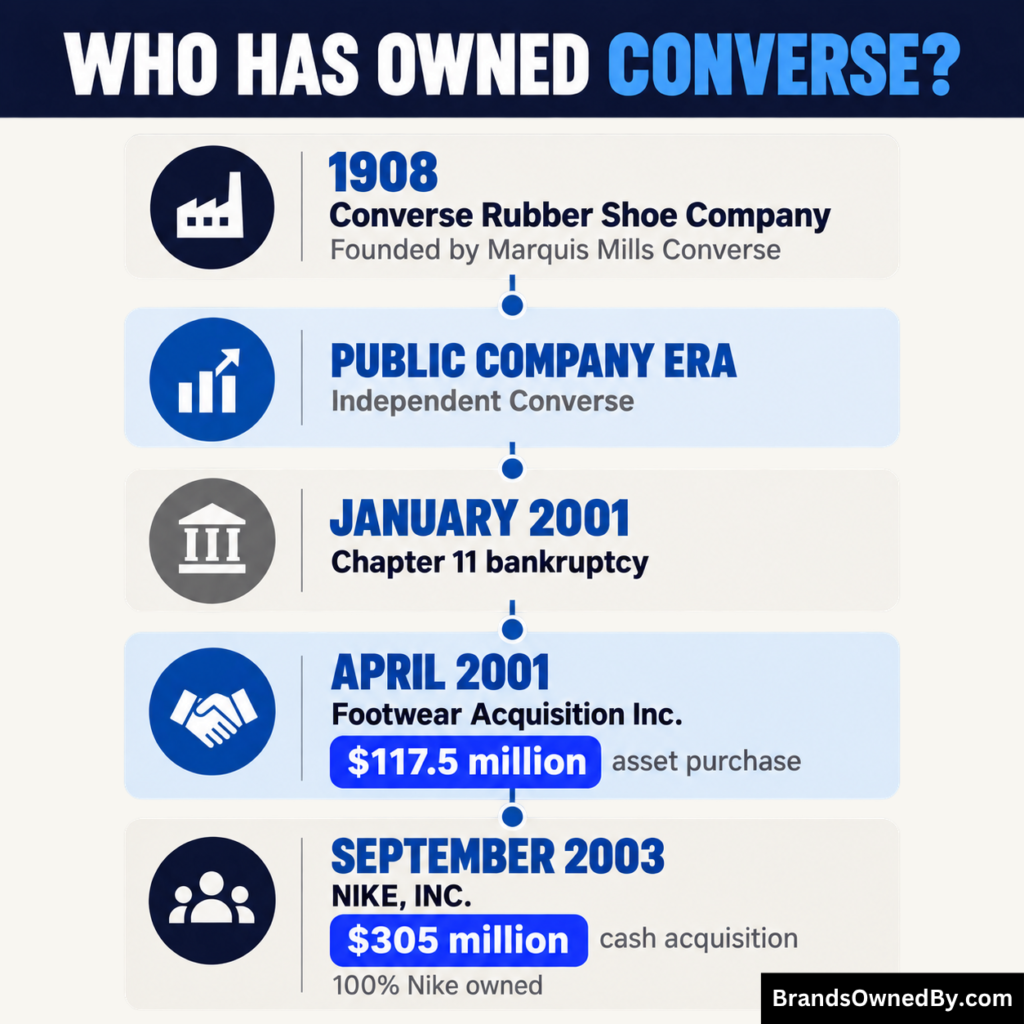
The simple answer hides a more complicated corporate history. Converse entered Chapter 11 bankruptcy in 2001. Its assets were then purchased by Footwear Acquisition Inc. for approximately $117.5 million. Nike bought the reorganized business two years later.
Converse now operates as a distinct brand and reportable segment within Nike. It has its own headquarters, management, stores, digital channels, and published operating results. However, Nike owns the equity and retains ultimate control over the company.
Converse Founders
Converse was founded by Marquis Mills Converse, whose vision laid the foundation for one of the most enduring footwear brands in history. While not a founder, Charles Chuck Taylor played a transformative role in shaping the brand’s identity, cultural relevance, and global recognition. Together, their contributions defined Converse’s early direction and long-term legacy.
Marquis Mills Converse
Marquis Mills Converse founded the Converse Rubber Shoe Company in 1908 in Malden, Massachusetts. He was an experienced footwear entrepreneur who identified growing demand for durable rubber-soled shoes. His initial focus was on functional footwear such as galoshes and winter boots. These products were designed for practicality rather than sport or fashion.
Marquis Converse emphasized manufacturing efficiency and product durability. Under his leadership, the company quickly scaled production. Within a few years, Converse was producing thousands of pairs annually. His willingness to explore new categories led the company into athletic footwear, setting the stage for its later dominance in basketball shoes. Although he did not witness the brand’s cultural peak, his early strategic decisions established the company’s long-term foundation.
Charles “Chuck” Taylor
Charles “Chuck” Taylor was not a founder, but his influence on Converse was profound. He joined the company in the early 1920s as a salesman. At the time, he was also a semi-professional basketball player and coach. Taylor immediately recognized the potential of Converse’s basketball shoe, the All Star.
He traveled across the United States conducting basketball clinics. During these tours, he promoted Converse shoes directly to athletes, coaches, and schools. Taylor also provided feedback that led to design improvements, including better ankle support and flexibility. His contributions were so significant that Converse added his name to the shoe’s ankle patch in 1932. The Chuck Taylor All Star became one of the most recognizable sneakers in history.
Taylor’s role extended beyond sales. He helped embed Converse into basketball culture and youth sports. Over time, his name became inseparable from the brand itself.
Ownership Snapshot
Converse is not an independent or publicly listed company. It operates as a wholly owned subsidiary of Nike, Inc. Nike holds 100 percent ownership of Converse. There are no minority shareholders, public investors, or external equity partners involved in the brand.
Because of this structure, Converse does not issue shares. It does not have its own stock ticker. All equity ownership is consolidated under Nike.
![Who Owns Converse [Infographic]](https://brandsownedby.com/wp-content/uploads/2026/01/Who-Owns-Converse-Infographic-1024x1024.png)
Subsidiary Status Within Nike
Converse functions as a standalone brand within Nike’s corporate portfolio. It has its own internal teams covering design, marketing, product development, and brand strategy. Despite this operational independence, legal ownership and ultimate authority rest entirely with Nike.
Nike treats Converse as a strategic lifestyle brand. It complements Nike’s performance-focused footwear and apparel lines. This positioning influences investment priorities, product focus, and long-term planning.
No Public or Institutional Shareholders
Unlike many global footwear brands, Converse does not have institutional investors, hedge funds, or retail shareholders at the brand level. Any institutional ownership applies only to Nike, not Converse directly.
This means decisions about Converse are not influenced by shareholder votes specific to the brand. Instead, Converse’s future is shaped internally by Nike’s executive leadership and board of directors.
Acquisition-Based Ownership Model
Nike acquired Converse outright rather than taking a partial stake. This full acquisition model eliminated fragmented ownership. It also allowed Nike to restructure Converse without external approval.
Since the acquisition, ownership has remained unchanged. Converse has not been spun off, partially sold, or listed publicly. Nike continues to view Converse as a long-term brand asset rather than a short-term investment.
Strategic Importance of Ownership
Nike’s full ownership provides Converse with financial backing, global infrastructure, and supply chain access. It also allows Converse to take creative risks without the pressure of independent financial reporting.
At the same time, Nike’s ownership ensures brand consistency, operational discipline, and alignment with broader corporate objectives. This balance defines Converse’s ownership snapshot today.
Ownership History
Converse’s ownership history reflects the full lifecycle of a legacy American brand. It began as a founder-led manufacturing company, evolved into a publicly traded corporation, struggled under competitive pressure, and ultimately became part of a global sportswear group. Each ownership phase shaped how Converse operated, positioned its products, and responded to market changes.
Understanding this timeline explains why Converse looks and functions the way it does today.
Founder-Led and Privately Owned Era
When Converse was founded in 1908, ownership was entirely private. The company was controlled by its founder and early backers who were focused on manufacturing efficiency and regional distribution. Decisions were centralized and conservative. The business model revolved around producing durable rubber footwear for everyday use.
As athletic footwear demand increased, Converse gradually expanded into sports shoes. Ownership during this period remained closely held. This allowed the company to pivot into basketball footwear without shareholder pressure. The introduction of the All Star shoe marked a critical shift. Converse became increasingly tied to sports culture while remaining privately owned.
Growth and Transition to Public Ownership
As Converse expanded nationally and internationally, it transitioned into a publicly traded company. Going public allowed Converse to raise capital to scale production, invest in marketing, and expand distribution. Ownership became dispersed among institutional investors and public shareholders.
Public ownership coincided with Converse’s dominance in basketball footwear. For decades, the brand held a commanding position in the U.S. market. However, being public also exposed Converse to rising competition and shareholder expectations. Innovation cycles slowed. Competitors invested more aggressively in technology, endorsements, and performance marketing.
Competitive Pressure and Structural Weaknesses
By the 1990s, Converse’s ownership structure became a liability. Public investors expected growth, but the brand struggled to compete with faster-moving rivals. Licensing agreements fragmented international control. Manufacturing inefficiencies increased costs. Product innovation lagged behind industry standards.
Shareholder-driven decision-making limited long-term reinvestment. Instead of deep restructuring, Converse relied on brand nostalgia. This approach failed to reverse declining performance. Public ownership amplified financial stress rather than solving it.
Bankruptcy and End of Public Ownership
In 2001, Converse filed for bankruptcy protection. This event effectively ended its era as an independent public company. Existing shareholders were wiped out or severely diluted. The brand’s intellectual property and core assets remained valuable, but the company lacked the capital and infrastructure to recover on its own.
Bankruptcy created an opportunity for acquisition. Converse required a parent company with global scale, strong distribution, and operational discipline to survive.
Acquisition by Nike and Full Buyout
In 2003, ownership transferred entirely to Nike, Inc. through a full acquisition. Nike purchased 100 percent of Converse. No minority stakes were retained. Converse was taken private and delisted from public markets.
This acquisition fundamentally changed Converse’s trajectory. Nike absorbed Converse into its corporate structure while preserving brand autonomy. Nike regained control of licensing. It integrated Converse into its global supply chain and retail network. The ownership shift marked a clean break from Converse’s fragmented past.
Long-Term Ownership Stability Under Nike
Since the acquisition, Converse has remained fully owned by Nike. There have been no partial sales, spin-offs, or public listing attempts. Nike treats Converse as a long-term brand asset rather than a short-term financial play.
Ownership stability allowed Converse to reposition itself. The brand moved away from performance athletics and leaned into lifestyle, streetwear, and cultural relevance. This strategy would have been difficult under public ownership due to quarterly earnings pressure.
Present Ownership Status
As of 2026, Converse remains a wholly owned subsidiary of Nike. All brand assets, trademarks, and strategic authority sit with Nike. Converse does not have independent shareholders. Its ownership history has reached a stable phase defined by centralized control, global scale, and long-term brand management.
This evolution explains why Converse today operates with creative freedom but within a disciplined corporate framework.
Who Owns Converse?
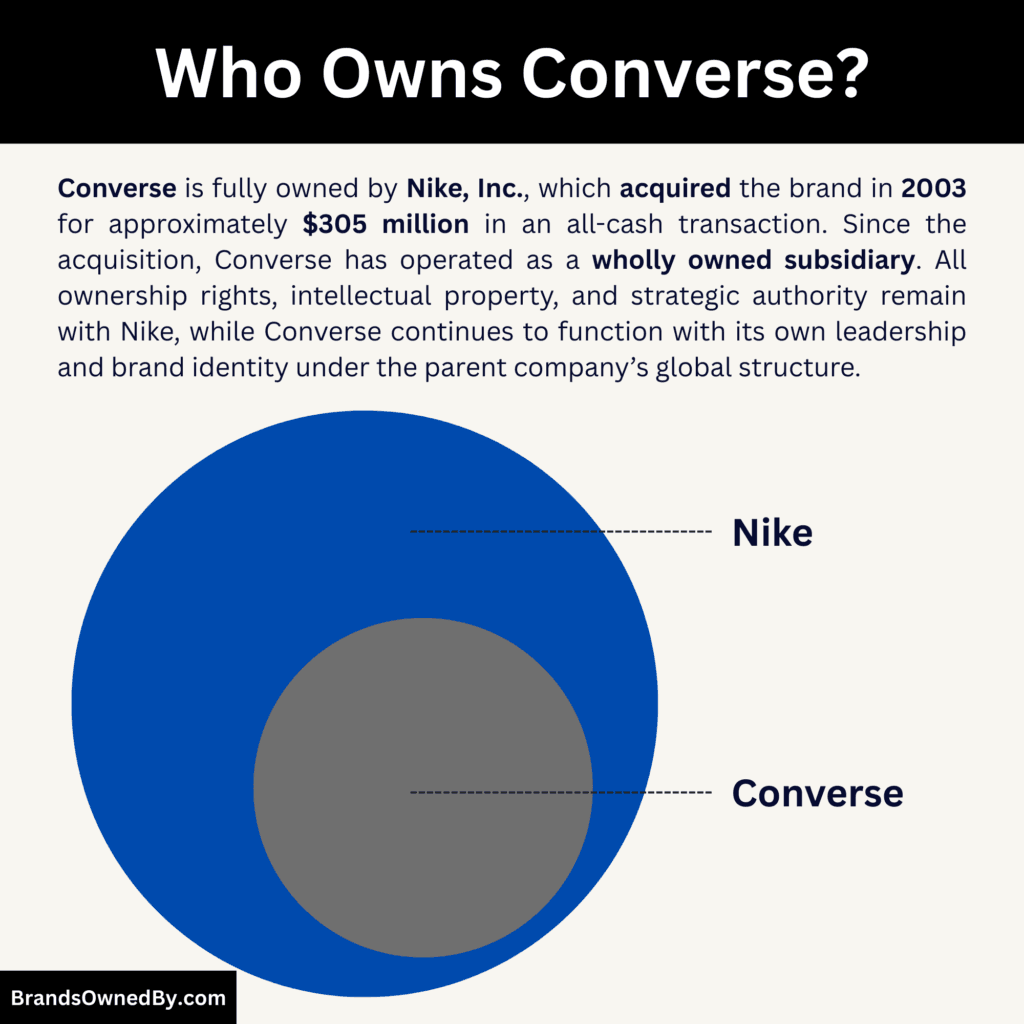
Converse is fully owned and controlled by Nike, Inc.. The brand operates as a wholly owned subsidiary, meaning Nike holds 100 percent ownership of Converse. There are no public shareholders, minority investors, or external partners at the Converse level. All equity, strategic authority, and long-term control sit entirely with Nike, shaping how Converse is funded, managed, and positioned globally.
Parent Company: Nike, Inc.
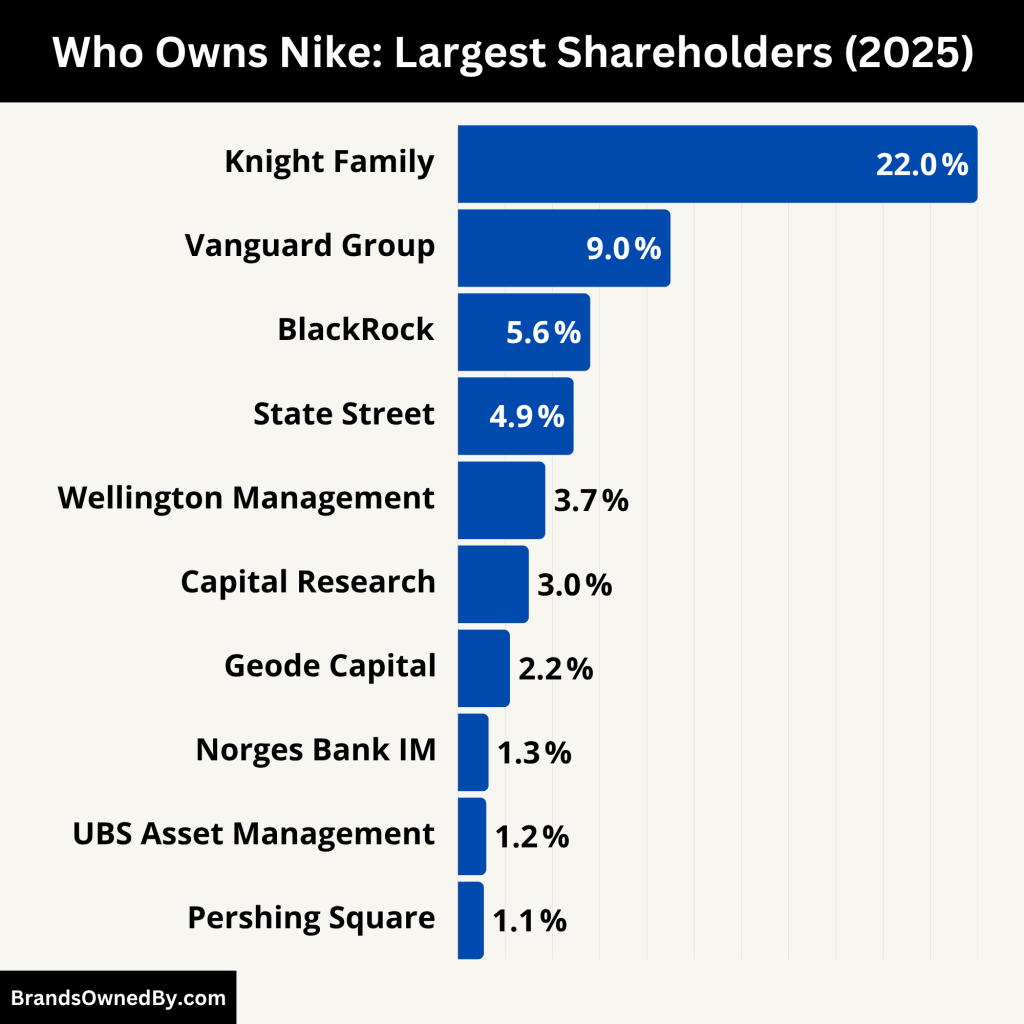
Nike, Inc. is the direct parent company of Converse and one of the most influential sportswear corporations in the world. Nike operates a multi-brand strategy that separates performance-driven athletic products from lifestyle and heritage brands. Converse sits firmly within the lifestyle category.
Nike provides Converse with access to global manufacturing partners, logistics networks, digital commerce platforms, and retail infrastructure. This support enables Converse to operate at scale without duplicating core corporate functions. At the same time, Nike allows Converse to retain its own brand voice, creative direction, and cultural positioning.
From a strategic perspective, Nike uses Converse to reach audiences that prioritize self-expression, fashion, and subculture rather than performance sports. This prevents overlap with Nike-branded footwear and reduces internal competition. Converse benefits from Nike’s financial strength while remaining creatively distinct.
Acquisition Insights
Nike acquired Converse in 2003. The acquisition followed Converse’s bankruptcy filing in 2001, which left the brand financially distressed but still culturally powerful. Nike identified Converse as an undervalued asset with strong global recognition but weak operational foundations.
The acquisition was completed as a full buyout. Nike purchased 100 percent of Converse’s equity, taking the brand private and ending its existence as a publicly traded company.
Nike acquired Converse for approximately $305 million in an all-cash transaction. The deal included Converse’s trademarks, intellectual property, product lines, and global operations. There were no stock swaps or earn-out clauses tied to future performance.
By acquiring Converse outright, Nike eliminated fragmented ownership and avoided ongoing shareholder obligations. The all-cash structure also allowed for immediate restructuring without regulatory or investor resistance.
Strategic Rationale Behind the Acquisition
Nike did not acquire Converse to compete directly in performance basketball footwear. Instead, Nike saw Converse as a heritage and lifestyle brand with long-term cultural value. At the time of acquisition, Converse lacked the capital, supply chain control, and global coordination needed to compete independently.
Nike’s strategy focused on stabilizing the brand, regaining control over international licensing, and repositioning Converse as a fashion-driven sneaker label. This approach allowed Converse to grow without requiring heavy investment in sports technology or athlete endorsements.
Post-Acquisition Integration
After the acquisition, Nike integrated Converse into its corporate systems while preserving brand autonomy. Manufacturing was optimized. Distribution channels were expanded. Licensing agreements were renegotiated or brought back under central control.
Converse leadership continued to operate the brand, but within Nike’s governance framework. This integration improved operational efficiency while allowing Converse to remain culturally authentic.
Long-Term Ownership and Stability
Since 2003, Converse’s ownership has not changed. Nike has not sold any stake, invited external investors, or pursued a public listing for the brand. Converse remains a permanent part of Nike’s brand portfolio.
This long-term ownership structure has allowed Converse to focus on brand longevity rather than short-term financial cycles. The result is a stable ownership environment where creative strategy and cultural relevance take precedence over quarterly performance pressures.
Competitor Ownership Comparison
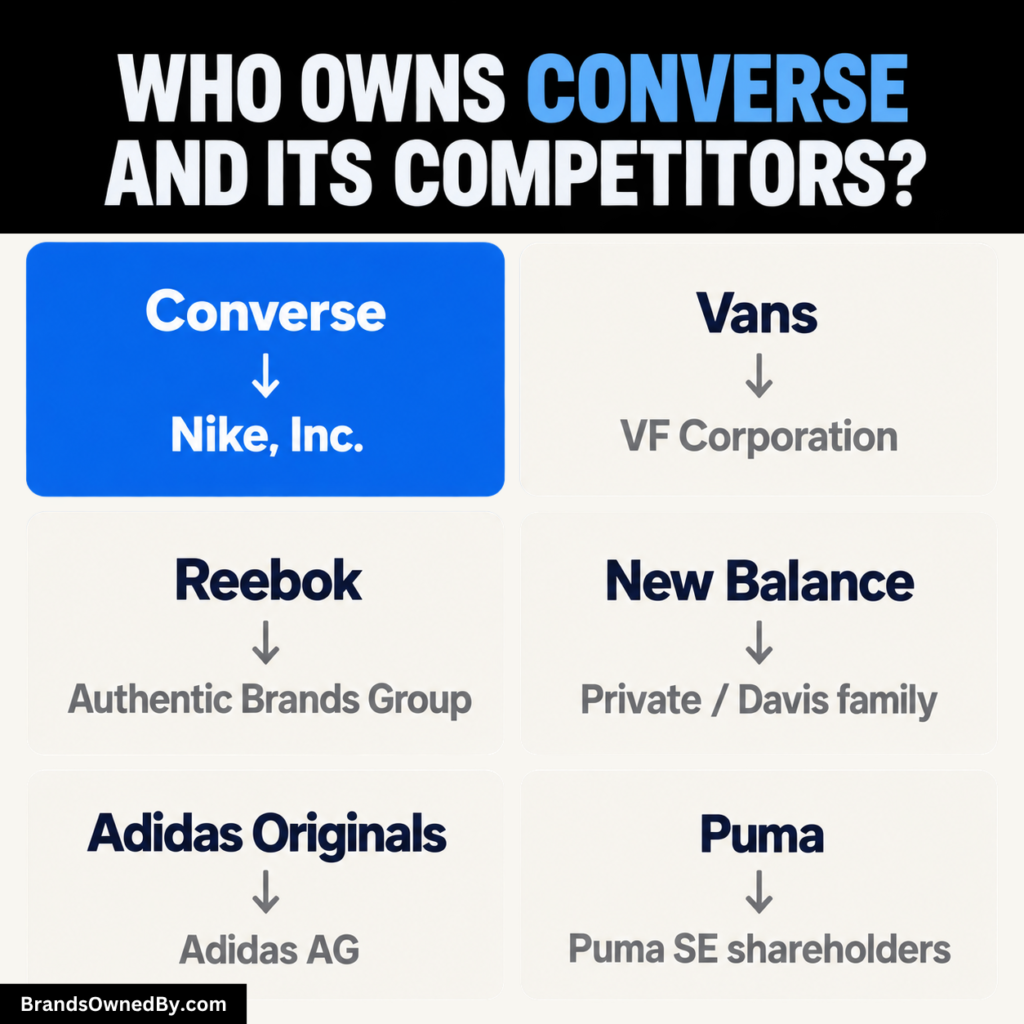
Understanding who owns Converse becomes clearer when it is compared with the ownership structures of its closest competitors. While Converse is fully owned by a single global corporation, competing brands operate under a mix of public, private, and family-controlled ownership models. These differences directly influence brand strategy, investment priorities, and long-term positioning.
Converse vs Vans
Converse competes most directly with Vans in the lifestyle and streetwear sneaker segment. Vans is owned by VF Corporation, a publicly traded apparel group that manages multiple brands across footwear, clothing, and accessories.
Unlike Converse, which sits within a sportswear-focused parent, Vans operates inside a diversified fashion conglomerate. VF Corporation balances capital and attention across many brands. Converse, by contrast, benefits from being part of a narrower, sports-led ecosystem under Nike, which allows deeper focus on footwear culture and sneaker-driven storytelling.
Converse vs Adidas Originals
Adidas Originals is the lifestyle division of Adidas AG, a publicly traded multinational corporation. Adidas AG owns and controls the Originals brand internally rather than operating it as a separate subsidiary.
In this case, ownership is similar in scale but different in structure. Converse operates as a distinct subsidiary with its own leadership, while Adidas Originals is a line within a larger brand. Converse’s standalone brand governance allows clearer identity separation, whereas Adidas Originals must align closely with Adidas’ overall brand narrative and shareholder expectations.
Converse vs Puma
Puma is owned and controlled by Puma SE, a publicly listed company. Its largest shareholder is Kering, which holds a significant controlling stake.
This structure places Puma in a hybrid position. While it is publicly traded, strategic influence comes from a luxury-focused parent group. Converse differs by being fully absorbed into a sportswear corporation rather than influenced by fashion or luxury shareholders. This impacts brand tone, pricing strategy, and collaboration focus.
Converse vs New Balance
New Balance stands apart from most competitors because it remains privately owned by the Davis family. There is no public shareholder pressure, and control remains within a single family.
This ownership model offers long-term stability similar to Converse under Nike. However, New Balance operates independently without a parent company. Converse benefits from Nike’s scale and infrastructure, while New Balance relies on internal capital and organic growth. The trade-off is independence versus global corporate support.
Converse vs Reebok
Reebok has undergone multiple ownership changes. It is currently owned by Authentic Brands Group, a brand licensing and management firm.
This ownership model differs sharply from Converse. Authentic Brands Group focuses on licensing rather than direct product development and manufacturing. Converse, under Nike, remains deeply involved in product creation, design, and distribution. As a result, Converse maintains tighter control over brand execution and long-term identity.
The core difference lies in ownership concentration and strategic intent. Converse is 100% owned by Nike, with no external shareholders or licensing-driven control. Many competitors answer to public markets, family owners, or brand management firms.
Nike’s ownership allows Converse to prioritize brand equity and cultural relevance without the pressure of independent financial reporting. Competitors with public ownership often face quarterly performance expectations. Others with licensing-based ownership may prioritize short-term brand monetization.
Overall Competitive Ownership Position
Converse occupies a unique ownership position in the sneaker market. It combines the stability of full corporate ownership with creative autonomy at the brand level. Compared to competitors, Converse benefits from long-term backing, centralized control, and access to one of the most advanced global sportswear infrastructures. This ownership structure continues to shape how Converse competes, innovates, and evolves within the global footwear landscape.
Who Controls Converse?
Control of Converse is shaped by a layered governance structure. While Converse operates with its own leadership and brand teams, ultimate authority sits with its parent company. Understanding who controls Converse requires looking at corporate oversight, executive leadership, and how decisions are made inside the organization.
Ultimate Control by the Parent Company
Converse is fully controlled by Nike, Inc., which owns 100 percent of the brand. Nike holds all voting rights, ownership interests, and legal authority. This means final approval over major strategic decisions rests with Nike’s senior leadership and board of directors.
Nike determines long-term priorities for Converse. This includes capital allocation, global expansion, leadership appointments, and brand positioning within Nike’s broader portfolio. Converse does not have an independent board that can override Nike’s decisions.
Brand-Level Executive Leadership
Day-to-day control of Converse is handled by its internal executive team. The brand is led by a Chief Executive Officer who oversees operations, product strategy, marketing, and global growth. As of recent years, the CEO of Converse has been Jared Carver.
The CEO is responsible for executing Nike’s strategic vision while maintaining Converse’s distinct brand identity. This role acts as the bridge between Converse’s creative culture and Nike’s corporate governance.
Supporting the CEO are senior leaders across product, design, merchandising, digital commerce, and regional markets. These executives manage operational decisions without requiring constant parent-company approval.
Decision-Making Structure
Converse operates under a semi-autonomous model. Routine decisions such as product design, seasonal collections, collaborations, and marketing campaigns are made internally by Converse leadership.
However, high-impact decisions follow a different path. Major investments, global restructurings, leadership changes, and long-term strategic shifts require coordination with Nike. In these cases, Converse leadership presents proposals that must align with Nike’s corporate objectives.
This structure allows Converse to move quickly in creative areas while maintaining financial discipline and strategic consistency at the group level.
Role of Nike’s Senior Leadership
Nike’s senior executives play a direct role in overseeing Converse’s performance. Converse leadership regularly reports financial results, growth metrics, and brand performance to Nike’s executive committee.
Nike’s CEO and top management influence Converse’s direction indirectly through portfolio strategy. If Nike decides to emphasize lifestyle footwear or digital-first retail, Converse is expected to align with those priorities.
This oversight ensures Converse supports Nike’s overall growth strategy without competing directly with Nike-branded products.
How Much Revenue Does Converse Make?
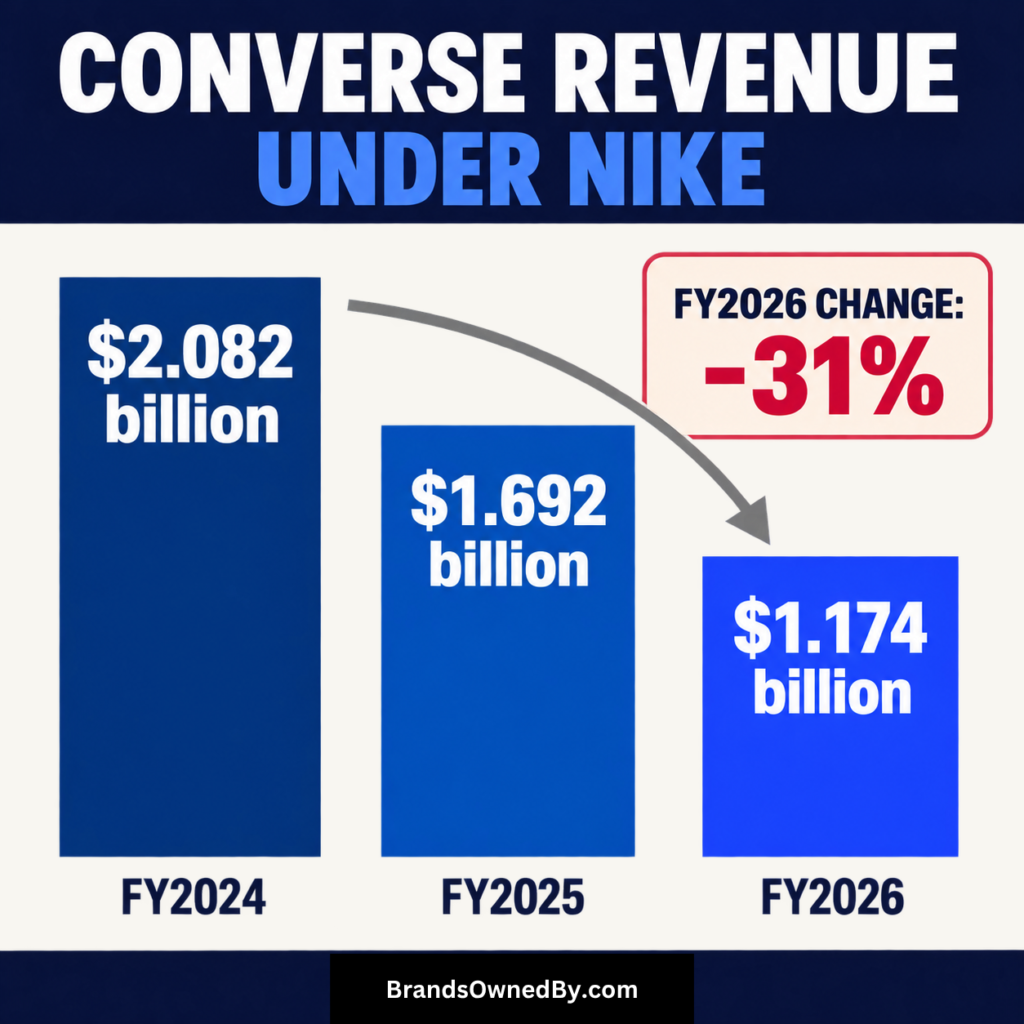
Converse generated $1.174 billion in revenue during Nike’s fiscal year ended May 31, 2026.
That figure was 31% below the $1.692 billion recorded in fiscal 2025. Fiscal 2025 revenue had already fallen 19% from $2.082 billion in fiscal 2024. On a currency-neutral basis, the declines were 32% in fiscal 2026 and 18% in fiscal 2025.
Across those two years, annual Converse revenue fell by $908 million. That equals a cumulative decline of approximately 44% from fiscal 2024.
The deterioration was broad. Nike said fiscal 2026 revenue declined in every Converse territory. Unit sales fell 31%. A lower average selling price reduced revenue by approximately one additional percentage point.
This is not a minor slowdown. Converse moved from a business with more than $2 billion in annual revenue to one generating less than $1.2 billion in only two fiscal years.
Converse Revenue by Product Category
Footwear generated $1.013 billion in fiscal 2026. It accounted for approximately 86% of total Converse revenue.
Apparel contributed $48 million. Equipment generated $21 million. Other revenue was $92 million and primarily represented royalties from territories served by third-party licensees.
Every disclosed category declined. Footwear revenue fell 30% from $1.457 billion in fiscal 2025. Apparel dropped 40% from $80 million. Equipment declined 34% from $32 million. Other revenue fell 25% from $123 million.
The figures show how concentrated Converse remains. The company sells clothing and accessories, but footwear still carries the business. Any weakness in the sneaker portfolio therefore has an outsized effect on group revenue.
They also correct unsupported estimates about the brand’s sales mix. Nike discloses the actual category figures, so there is no need to guess what percentage of revenue comes from apparel or individual shoe lines.
Converse Wholesale and Direct Sales
Wholesale customers generated $605 million of Converse revenue in fiscal 2026. Direct-to-consumer sales produced $477 million. The remaining $92 million came from other revenue, mainly licensing royalties.
Wholesale revenue fell 31% on a reported basis and 33% in currency-neutral terms. Direct-to-consumer revenue also declined 31% as reported and 33% currency-neutral. Nike attributed the direct decline to reduced traffic in every territory.
The similarity between the channel declines is significant. The weakness was not limited to Converse-owned stores or e-commerce. It also affected outside retail partners.
Converse still has meaningful direct infrastructure. Nike reported 114 Converse stores worldwide at the end of fiscal 2026, including 60 in the United States. Digital commerce adds another direct channel. Yet the results show that owning the customer relationship did not insulate the company from lower demand and traffic.
Is Converse Profitable?
Converse remained profitable at the segment EBIT level in fiscal 2026, but only narrowly.
The business produced $18 million in earnings before interest and taxes. That was down 93% from $240 million in fiscal 2025. EBIT had already fallen from $474 million in fiscal 2024.
The implied EBIT margin declined from about 22.8% in fiscal 2024 to 14.2% in fiscal 2025 and approximately 1.5% in fiscal 2026. Revenue weakened sharply, while the cost base could not contract at the same speed.
Gross profit fell to $514 million from $824 million. Gross margin declined by 490 basis points to 43.8%. It had been 48.7% in fiscal 2025 and 52.5% in fiscal 2024.
Nike attributed the margin decline to lower average selling prices and costs connected with the brand and marketplace reset. Higher discounts and channel mix pressured pricing. Inventory obsolescence reserves and employee severance costs added further pressure.
Demand creation expense fell 39% to $95 million. Operating overhead declined 7% to $402 million. Those reductions were not enough to offset the loss of gross profit.
The ownership implication is clear. Nike has not lost control of Converse, but it now owns a materially smaller and less profitable business than it did two years earlier. The current challenge is operational recovery, not ownership uncertainty.
What Is Converse Worth?
Converse has no publicly disclosed stand-alone valuation.
It is not listed on a stock exchange, so it has no market capitalization. Nike does not publish an estimated enterprise value for the subsidiary. No recent arm’s-length sale has established a current price.
This makes precise claims that Converse is worth $3 billion, $4 billion, or another round number unreliable unless they are supported by a transparent valuation method. Revenue multiples can produce an estimate, but the result would depend heavily on assumptions about brand strength, future recovery, margins, and comparable companies.
The most defensible historical valuation point is the 2003 transaction. Nike agreed to pay $305 million for the equity and recorded approximately $310 million of cash purchase price including costs. It allocated $246.2 million to trademarks and $69.1 million to goodwill.
Those figures are useful for understanding what Nike acquired. They do not establish a 2026 value. Converse has since expanded globally, generated billions in cumulative revenue, and then entered a major contraction.
Any current appraisal would have to account for both sides of that record. Converse owns enduring intellectual property and global consumer recognition. It also produced only $18 million of segment EBIT in fiscal 2026 and faces another year of expected reset-related pressure.
How Important Is Converse to Nike?
Converse is strategically recognizable but financially small relative to Nike.
Nike Brand generated $45.222 billion in fiscal 2026 revenue. Converse generated $1.174 billion. Converse therefore represented roughly 2.5% of Nike, Inc.’s $46.398 billion in total revenue.
Its EBIT contribution was even smaller. Converse delivered $18 million compared with $5.855 billion of EBIT across Nike Brand’s geographic segments and Global Brand Divisions before corporate costs and eliminations.
Size is not the only measure of importance. Converse gives Nike control of the Chuck Taylor All Star, one of the most recognizable silhouettes in footwear. It also places Nike in cultural spaces that do not depend on technical performance claims or current athlete endorsements.
That differentiation has portfolio value. A heritage canvas sneaker can reach consumers through fashion, music, art, skateboarding, and casual wear. It can also support collaborations that would feel less natural under the core Nike performance identity.
However, strategic relevance cannot excuse indefinite financial decline. Nike’s fiscal 2026 filing said Converse would take more time to work through its reset and expected negative effects to continue throughout fiscal 2027. The brand must restore product demand and marketplace health if it is to justify investment beyond the value of its heritage.
Brands Owned by Converse
As of 2026, Converse operates as a single-brand company. It does not own independent companies, subsidiaries, or legally separate businesses. Instead, Converse manages a portfolio of internally developed product brands and lines that exist under the Converse brand itself. These brands are not separate legal entities. They are product families, design platforms, and sub-brands fully controlled and operated by Converse.
Below is a breakdown of all major brands, lines, and entities owned and managed directly by Converse:
Chuck Taylor All Star
Chuck Taylor All Star is the most important and valuable brand owned by Converse. It is not a licensed or external brand. It is fully owned, controlled, and operated by Converse.
This line represents the core identity of Converse. Chuck Taylor All Stars account for a majority of Converse’s global footwear sales and an estimated 60% of total brand value. The product line includes high-top and low-top silhouettes, platform versions, seasonal colorways, and limited-edition collaborations.
Chuck Taylor is positioned as a timeless lifestyle sneaker rather than a performance product. Its consistency and global recognition make it the financial and cultural backbone of Converse.
Chuck 70
Chuck 70 is a premium extension of the Chuck Taylor line. It is fully owned and operated by Converse and designed to offer higher-quality materials, improved cushioning, and elevated finishes.
This line targets consumers willing to pay a premium for durability and design authenticity. Chuck 70 carries higher margins than standard Chuck Taylor models and plays a key role in Converse’s premium positioning.
The line is also frequently used for high-profile collaborations and fashion-forward releases.
One Star
One Star is another proprietary Converse brand originally rooted in basketball footwear. Today, it functions as a lifestyle and streetwear-focused line.
Converse owns full rights to the One Star name, design, and distribution. The brand is positioned toward youth culture, skate-influenced fashion, and casual wear. While smaller than Chuck Taylor, One Star remains strategically important for diversification and trend relevance.
Converse CONS
Converse CONS is the company’s skateboarding-focused brand. It is fully owned and operated by Converse and serves as its primary connection to the skate community.
CONS products are designed with performance upgrades tailored to skateboarding, including reinforced materials and specialized soles. This line allows Converse to participate in action sports culture without repositioning its core lifestyle products.
CONS also supports Converse’s credibility in skateboarding through athlete partnerships and skate-specific product design.
Jack Purcell
Jack Purcell operates as a brand owned by Converse but originally originated as a separate name. Converse controls design, manufacturing, and global distribution.
The Jack Purcell line is positioned as a minimalist, premium casual sneaker with a more refined aesthetic. It appeals to consumers seeking understated design rather than bold streetwear.
While smaller in scale, Jack Purcell plays a role in Converse’s premium and lifestyle diversification strategy.
Converse Apparel and Accessories
Converse also owns and operates its apparel and accessories business directly under the Converse name. This includes t-shirts, hoodies, jackets, backpacks, socks, and headwear.
These products are designed to complement footwear sales rather than function as standalone fashion brands. Apparel and accessories contribute approximately 15% of Converse’s total revenue and help increase average order value across direct-to-consumer channels.
All apparel and accessory lines are fully controlled by Converse and are not licensed to third parties.
Conclusion
Nike owns 100% of Converse.
The ownership dates to September 2003, when Nike completed its purchase of all Converse equity. The agreed price was $305 million in cash, while the total cash purchase price reached approximately $310 million after acquisition costs.
That transaction followed a critical restructuring. Converse filed for bankruptcy in January 2001. Footwear Acquisition bought its assets for approximately $117.5 million and operated the reorganized business before selling it to Nike.
Nike then helped Converse grow into a business producing more than $2 billion in annual revenue. The latest results show a sharp reversal. Revenue fell to $1.174 billion in fiscal 2026, and EBIT declined to $18 million.
Ownership is therefore not the unresolved issue. Nike’s control is complete and well documented. The important question is whether Nike can rebuild demand, improve marketplace health, and return one of footwear’s best-known heritage brands to profitable growth.
FAQs
When did Nike buy Converse?
Nike acquired Converse in 2003. The purchase followed Converse’s bankruptcy filing and was completed as a full buyout, transferring 100% ownership to Nike, Inc..
Who owns Converse shoes?
Converse shoes are owned by Nike. Converse operates as a wholly owned subsidiary, and all Converse footwear is produced, distributed, and controlled under Nike’s ownership structure.
Is Converse owned by Nike?
Yes. Converse is fully owned by Nike. There are no public shareholders or minority investors at the Converse brand level.
Who owned Converse before Nike?
Before Nike’s acquisition, Converse was an independent, publicly traded company. Prior to that, it operated as a privately owned business for many decades after its founding.
Is Converse still owned by Nike?
Yes. Converse remains 100% owned by Nike as of 2026. The ownership structure has not changed since the 2003 acquisition.
Does Chuck Taylor own Converse?
No. Chuck Taylor did not own Converse. He was a basketball player and salesman whose influence was so significant that the iconic sneaker was named after him, but he never held ownership in the company.
Who is the CEO of Converse?
As of 2026, the CEO of Converse is Jared Carver. He oversees global operations and brand strategy while reporting to Nike’s corporate leadership.
Is Converse Japan owned by Nike?
Yes. Converse Japan operates under licensing and corporate structures ultimately controlled by Nike. While local operations may have regional management, brand ownership and intellectual property rights remain with Nike.
Which country owns Converse?
Converse is owned by a U.S.-based company. Nike, its parent company, is headquartered in the United States, making Converse an American-owned global brand.