

- Harris Teeter is 100% owned by The Kroger Co. The supermarket chain has operated as a wholly owned Kroger subsidiary since January 2014, when Kroger completed its approximately $2.5 billion acquisition of the company.
- It remains operationally independent but is strategically controlled by Kroger. Harris Teeter retains its own brand, headquarters, and management team, while major decisions regarding investments, expansion, technology, and corporate strategy are ultimately overseen by Kroger.
- Before Kroger’s acquisition, Harris Teeter was a publicly traded company and was previously controlled by Ruddick Corporation. It originated from the 1960 merger of Harris Super Market and Teeter’s Food Mart and has since grown into one of the largest premium grocery chains in the Southeastern United States.
Harris Teeter is an American supermarket chain that operates primarily in the Southeastern and Mid-Atlantic regions of the United States. The company is known for offering a premium grocery shopping experience, with an emphasis on fresh produce, quality meats, prepared foods, pharmacy services, and customer convenience.
The retailer serves customers through a network of supermarkets, fuel centers, pharmacies, and digital shopping platforms. Over the decades, Harris Teeter has built a reputation for clean stores, strong customer service, and a broad selection of national and private-label products.
Although the company is owned by Kroger, Harris Teeter continues to operate under its own brand name and maintains a distinct identity within the grocery industry. The chain remains particularly strong in states such as North Carolina, South Carolina, Virginia, Maryland, Georgia, Delaware, Florida, and Washington, D.C.
The company focuses on attracting shoppers who value convenience, product quality, and an enhanced in-store experience. This positioning has helped Harris Teeter compete against traditional supermarkets, discount grocery chains, and specialty food retailers.
Harris Teeter Founders
Harris Teeter was founded through the merger of two successful North Carolina grocery businesses created by William Thomas Harris and Willis Lee Teeter. While the Harris Teeter brand officially began in 1960, its roots stretch back to the 1930s when both founders independently built respected supermarket operations.
The company’s creation was not the story of a single entrepreneur launching a store. Instead, it was the combination of two established grocery chains that had already proven successful in their local markets. This unique foundation gave Harris Teeter a larger scale and stronger market position from the very beginning.
William Thomas Harris
William Thomas Harris, commonly known as W.T. Harris, entered the grocery business during one of the most difficult economic periods in American history. In 1936, he opened Harris Super Market in Charlotte, North Carolina.
Unlike many small grocery stores of the era, Harris focused on modern retailing concepts. He emphasized product quality, store cleanliness, customer service, and efficient operations. These principles helped his business stand out in an increasingly competitive market.
Over the following decades, Harris expanded his grocery operations throughout the Charlotte region. His stores developed a loyal customer base and earned a reputation for reliability and service. By the late 1950s, Harris Super Markets had become one of North Carolina’s most respected regional grocery chains.
Many of the customer-focused practices that Harris introduced continue to influence Harris Teeter’s culture today. The company’s emphasis on shopping experience, employee service, and quality products can be traced directly to Harris’s management philosophy.
Willis Lee Teeter
Willis Lee Teeter entered the grocery industry in 1939 when he opened Teeter’s Food Mart in Mooresville, North Carolina. Like Harris, he recognized the growing demand for modern supermarkets that offered a broader product selection and greater convenience than traditional neighborhood stores.
Teeter was known for his entrepreneurial mindset and expansion strategy. He aggressively grew his business throughout western and central North Carolina, opening new stores and adapting to changing consumer preferences.
His approach focused on merchandising, competitive pricing, and operational growth. While Harris built a strong reputation in Charlotte, Teeter established a successful presence across other parts of the state. Together, their businesses covered complementary geographic markets.
Teeter’s ability to scale operations and identify growth opportunities played an important role in the future success of Harris Teeter. His expansion-focused mindset helped create a company capable of competing against much larger national grocery chains.
Why Harris and Teeter Merged
By the late 1950s, the grocery industry was changing rapidly. Larger supermarket chains were expanding across the United States, and regional operators faced increasing competition.
Rather than compete separately, the Harris and Teeter families saw an opportunity to combine their strengths. In 1960, Harris Super Markets and Teeter’s Food Mart merged to create Harris Teeter Supermarkets.
The merger united two experienced management teams, expanded the company’s store network, and created a stronger regional competitor. It also provided greater purchasing power, allowing the new company to negotiate better terms with suppliers and improve operating efficiency.
At the time of the merger, the combined business operated dozens of stores and immediately became one of the largest supermarket companies in North Carolina.
Ownership History
The ownership history of Harris Teeter reflects the broader evolution of the American grocery industry. What began as two family-owned grocery businesses eventually became part of one of the largest supermarket operators in the United States. Each ownership phase played a significant role in shaping the company’s growth, geographic expansion, and competitive position.
Family-Owned Beginnings (1936–1960)
Before Harris Teeter existed as a single company, W.T. Harris and Willis L. Teeter operated separate grocery businesses in North Carolina.
W.T. Harris founded Harris Super Market in Charlotte in 1936. Three years later, Willis Teeter opened Teeter’s Food Mart in Mooresville. Both entrepreneurs built successful regional chains during a period when supermarkets were becoming increasingly popular across America.
During these early years, ownership remained entirely in the hands of the Harris and Teeter families. Decisions were made directly by the founders and their management teams. The businesses focused on serving local communities, expanding store networks, and building strong customer relationships.
As both chains grew, they developed complementary strengths. Harris established a strong presence in Charlotte and surrounding areas, while Teeter expanded into other parts of North Carolina.
Formation of Harris Teeter Through Merger (1960)
A major ownership milestone occurred in 1960 when Harris Super Market and Teeter’s Food Mart merged to create Harris Teeter Supermarkets.
The merger combined the ownership interests of both founding families into a single company. Rather than operating as competitors, the families chose to pool their resources and create a stronger regional supermarket chain.
The newly formed Harris Teeter gained several advantages:
- A larger store network.
- Greater purchasing power.
- Expanded management expertise.
- Improved operational efficiency.
- Stronger competitive positioning against national chains.
The merger transformed Harris Teeter from two local businesses into one of North Carolina’s leading grocery retailers.
Public Company Era and Expansion (1960–1969)
Following the merger, Harris Teeter continued operating as an independent company. Ownership remained largely concentrated among company insiders, founding family members, and public investors.
During this period, the company expanded its store count and modernized its operations. The supermarket industry was becoming increasingly competitive, and Harris Teeter invested heavily in larger store formats, inventory management, and customer service improvements.
The company’s success attracted attention from larger corporate investors seeking exposure to the growing grocery sector.
Acquisition by Ruddick Corporation (1969)
In 1969, a significant ownership change occurred when Ruddick Corporation acquired Harris Teeter.
The transaction moved ownership from a largely independent supermarket company to a diversified corporate parent. Ruddick Corporation, which had interests in several industries, viewed Harris Teeter as a valuable growth asset.
Under Ruddick’s ownership, Harris Teeter gained access to additional capital and corporate resources. This support allowed the company to pursue expansion opportunities that may have been difficult as a smaller independent retailer.
Although ownership changed, Harris Teeter retained its brand identity and continued operating under its established name.
Growth Under Ruddick Corporation (1969–2013)
The Ruddick era became the longest ownership period in Harris Teeter’s history.
Over more than four decades, Harris Teeter evolved from a regional grocery chain into one of the most respected supermarket operators in the southeastern United States.
Several major developments occurred during this period.
Geographic Expansion
The company expanded beyond North Carolina into neighboring states, including South Carolina, Virginia, Maryland, Georgia, Delaware, Florida, and the Washington, D.C. metropolitan area.
This expansion significantly increased Harris Teeter’s customer base and market presence.
Store Modernization
Harris Teeter invested heavily in larger and more modern supermarkets.
Many stores introduced:
- Expanded fresh food departments.
- Full-service pharmacies.
- Fuel centers.
- Prepared food sections.
- Enhanced customer service offerings.
These investments helped differentiate the chain from discount-focused competitors.
Development of Premium Positioning
Unlike many supermarket chains that competed primarily on price, Harris Teeter positioned itself as a higher-quality grocery retailer.
The company emphasized fresh products, clean stores, customer service, and premium shopping experiences. This strategy helped build strong customer loyalty and allowed the brand to compete effectively against both traditional supermarkets and specialty grocery stores.
Ruddick Rebrands as Harris Teeter
As Harris Teeter became the dominant business within Ruddick Corporation, the parent company eventually changed its corporate name to Harris Teeter Supermarkets, Inc.
This move reflected the growing importance of the grocery business and the strength of the Harris Teeter brand.
Kroger Announces Acquisition (2013)
The next major ownership change came in 2013.
On July 9, 2013, The Kroger Co. announced an agreement to acquire Harris Teeter in a transaction valued at approximately $2.5 billion, including the assumption of debt.
At the time, Kroger was already one of America’s largest supermarket companies. The acquisition provided several strategic advantages.
For Kroger, Harris Teeter offered:
- Access to attractive southeastern markets.
- A premium supermarket brand.
- Strong customer loyalty.
- Established store locations in affluent communities.
- A growing digital grocery platform.
For Harris Teeter shareholders, the transaction provided a substantial premium compared to the company’s market value before the announcement.
The acquisition received regulatory approval and was completed in January 2014.
Harris Teeter Becomes a Wholly Owned Kroger Subsidiary (2014–Present)
Since January 2014, Harris Teeter has operated as a wholly owned subsidiary of The Kroger Co.
Unlike some acquisitions where brands disappear after being absorbed, Kroger chose to preserve the Harris Teeter name and operating structure.
This decision reflected the strong reputation Harris Teeter had developed over decades.
Under Kroger ownership, Harris Teeter gained access to:
- Kroger’s national supply chain.
- Advanced technology systems.
- Data analytics capabilities.
- Purchasing scale.
- Digital commerce infrastructure.
- Loyalty and rewards expertise.
At the same time, Harris Teeter continued operating under its established brand identity. Customers still shop at Harris Teeter stores rather than Kroger-branded locations in most of the company’s core markets.
Who Owns Harris Teeter?
![who owns Harris Teeter [infographic]](https://brandsownedby.com/wp-content/uploads/2026/06/who-owns-Harris-Teeter-infographic-683x1024.png)
Harris Teeter is wholly owned by The Kroger Co., one of the largest grocery retailers in the United States. The supermarket chain operates as a wholly owned subsidiary of Kroger and is no longer an independently traded public company.
This means Kroger owns 100% of Harris Teeter’s equity and has ultimate authority over major corporate decisions. While Harris Teeter maintains its own brand identity, management structure, and regional operating model, ownership rests entirely with Kroger.
Today, Harris Teeter remains one of Kroger’s most important regional supermarket brands and serves as a key part of the company’s presence in the Southeastern and Mid-Atlantic United States.
The ownership structure is relatively simple compared to that of large retail companies.
The Kroger Co.
↓
Harris Teeter Supermarkets, LLC
Since Harris Teeter is a wholly owned subsidiary, it does not have separate public shareholders. Instead, anyone with an ownership interest in Harris Teeter indirectly owns a portion of the company through their investment in Kroger stock.
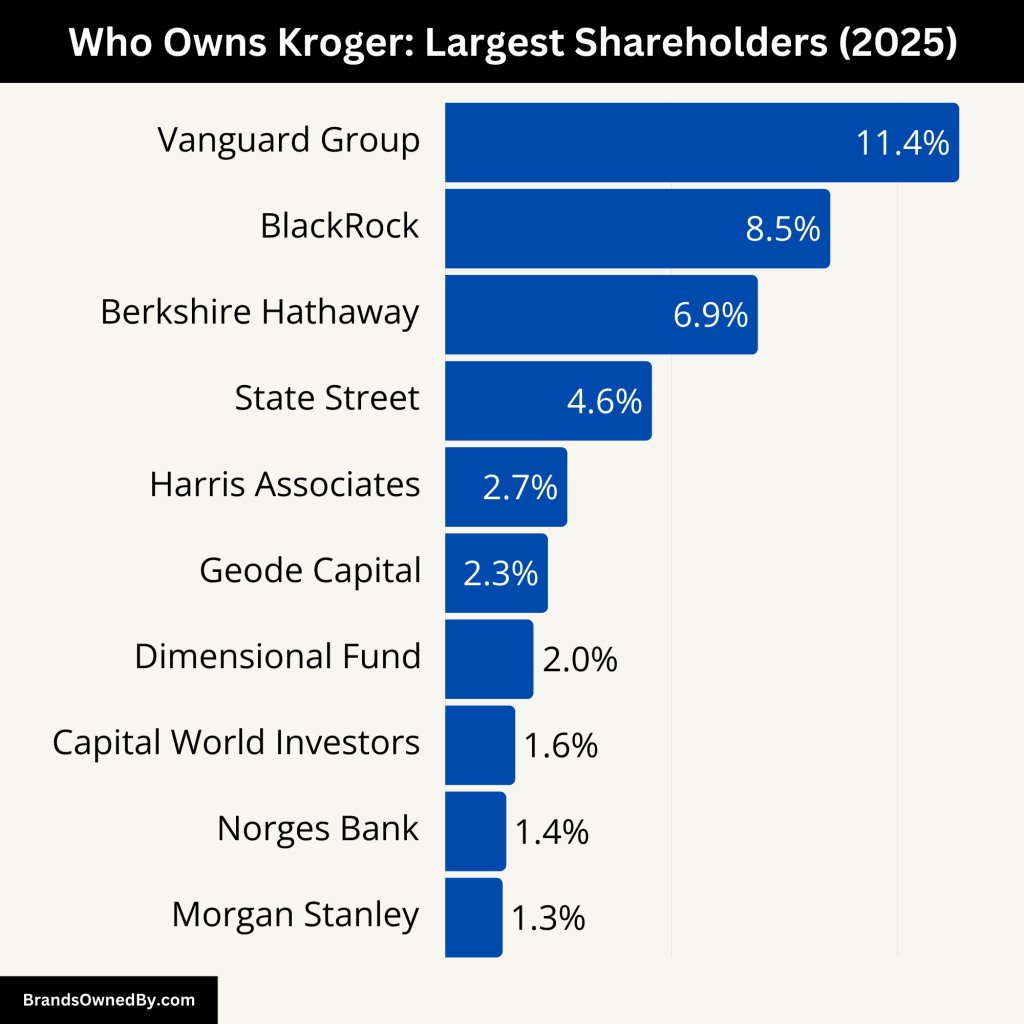
The ultimate economic owners of Harris Teeter are therefore Kroger’s shareholders, which include institutional investors, mutual funds, pension funds, exchange-traded funds, and individual investors.
Parent Company: The Kroger Co.
The Kroger Co. is the parent company of Harris Teeter.
Founded in 1883 by Bernard Kroger, the company has grown into one of the world’s largest food retailers. Kroger operates thousands of stores across the United States under multiple supermarket banners and retail brands.
Unlike many retailers that consolidate acquired brands into a single identity, Kroger often preserves successful regional brands. This strategy allows acquired chains to maintain customer loyalty while benefiting from Kroger’s scale and resources.
Harris Teeter is one of several regional grocery chains owned by Kroger. Other well-known Kroger-owned brands include:
- Ralphs.
- Fry’s Food Stores.
- King Soopers.
- Smith’s Food and Drug.
- Dillons.
- Fred Meyer.
- QFC.
- Mariano’s.
- Pick’n Save.
- Metro Market.
Rather than replacing the Harris Teeter name with Kroger stores, the parent company chose to continue operating the chain under its established brand.
How Kroger Acquired Harris Teeter
The acquisition of Harris Teeter was one of the most significant grocery industry transactions of the 2010s.
On July 9, 2013, Kroger announced a definitive agreement to acquire Harris Teeter. The deal was structured as an all-cash transaction that valued the company at approximately $2.5 billion, including assumed debt.
At the time, Harris Teeter was a publicly traded company listed on the New York Stock Exchange. The acquisition offered shareholders a premium over the company’s market value before the announcement.
After receiving regulatory approvals and satisfying closing conditions, the transaction officially closed in January 2014.
Once completed, Harris Teeter ceased operating as an independent public company and became a wholly owned subsidiary of Kroger.
Why Kroger Wanted Harris Teeter
The acquisition was strategically important for Kroger for several reasons.
Expansion Into Attractive Markets
Harris Teeter had a strong presence in fast-growing metropolitan areas throughout the Southeast and Mid-Atlantic regions.
Many of its stores were located in affluent communities with strong population growth and favorable demographics. These markets complemented Kroger’s existing footprint and strengthened its competitive position.
Access to a Premium Grocery Brand
Harris Teeter had developed a reputation as a higher-end supermarket chain with strong customer loyalty.
Its focus on fresh products, prepared foods, customer service, and store quality aligned with consumer trends toward premium grocery shopping.
By acquiring Harris Teeter, Kroger gained an established premium brand instead of building one from scratch.
Digital and E-Commerce Capabilities
At the time of the acquisition, Harris Teeter was already investing in online grocery ordering, pickup services, and home delivery initiatives.
These capabilities provided Kroger with valuable expertise as the grocery industry increasingly shifted toward digital commerce.
Strong Real Estate Portfolio
Many Harris Teeter locations occupied desirable retail sites in growing suburban and urban markets.
The store portfolio represented a valuable strategic asset that would have been difficult for competitors to replicate quickly.
Acquisition Terms and Key Details
Several aspects of the transaction made it notable within the grocery industry.
Transaction Value
The acquisition was valued at approximately $2.5 billion, including debt assumptions.
This represented one of the largest supermarket acquisitions completed during that period.
Premium Offered to Shareholders
Kroger paid a significant premium compared to Harris Teeter’s share price before the deal announcement.
The premium reflected Harris Teeter’s strong brand, attractive locations, and growth potential.
Regulatory Approval
Like most major retail mergers, the transaction underwent regulatory review.
The deal ultimately received approval, allowing Kroger to proceed with the acquisition.
Continuation of Operations
One of the most important aspects of the acquisition was Kroger’s decision to preserve the Harris Teeter brand rather than fully integrate it into the Kroger banner.
This helped maintain customer loyalty and brand recognition.
What Changed After the Acquisition?
Although ownership changed, many aspects of Harris Teeter remained the same.
Customers continued shopping at Harris Teeter stores, employees continued operating under the Harris Teeter name, and the company retained its headquarters in Matthews, North Carolina.
However, the business gained access to Kroger’s extensive resources.
These included:
- National purchasing power.
- Supply chain infrastructure.
- Distribution networks.
- Technology systems.
- Data analytics capabilities.
- Loyalty program expertise.
- Digital commerce investments.
As a result, Harris Teeter was able to benefit from the scale of one of America’s largest retailers while preserving much of its regional identity.
Who Ultimately Controls Harris Teeter?
While Harris Teeter has its own leadership team and president, ultimate control rests with Kroger.
Major strategic decisions are approved through Kroger’s corporate governance structure.
The chain’s control hierarchy generally follows this framework:
- Kroger shareholders.
- Kroger Board of Directors.
- Kroger Chief Executive Officer.
- Kroger Executive Leadership Team.
- Harris Teeter President.
- Harris Teeter senior management.
This structure allows Harris Teeter to manage day-to-day operations independently while aligning with Kroger’s broader corporate strategy.
How Harris Teeter Fits Into Kroger’s Portfolio
Harris Teeter occupies a unique position within Kroger’s collection of supermarket brands.
Many Kroger-owned chains compete primarily on convenience and value. Harris Teeter, however, focuses more heavily on premium grocery offerings, fresh departments, prepared foods, and customer experience.
For example, a customer shopping at Harris Teeter may encounter larger fresh-food sections, extensive wine selections, specialty products, chef-prepared meals, and enhanced in-store services compared to a traditional supermarket format.
This positioning helps Kroger serve multiple customer segments without relying on a single store concept.
Competitor Ownership Comparison
Harris Teeter operates in one of the most competitive grocery markets in the United States. While consumers often compare stores based on pricing, product selection, and customer experience, ownership structures can have an equally significant impact on how companies grow, invest, and compete.
As of June 2026, Harris Teeter is wholly owned by The Kroger Co. This gives the chain access to the resources of one of America’s largest food retailers. However, many of its biggest competitors are controlled through entirely different ownership models, ranging from family ownership and employee ownership to multinational corporations and technology giants.
| Grocery Chain | Current Owner (June 2026) | Ownership Type | Key Ownership Advantage |
|---|---|---|---|
| Harris Teeter | The Kroger Co. | Wholly owned subsidiary | Access to Kroger’s nationwide scale, purchasing power, technology, and supply chain while maintaining a regional brand identity. |
| Publix | Employees and the Jenkins Family | Employee-owned private company | Long-term decision-making without public market pressure and strong employee alignment. |
| Food Lion | Ahold Delhaize | Subsidiary of a publicly traded multinational retailer | Benefits from the resources, capital, and international expertise of a global grocery group. |
| Whole Foods Market | Amazon | Wholly owned subsidiary | Access to Amazon’s technology ecosystem, logistics network, AI capabilities, and Prime customer base. |
| Trader Joe’s | Aldi Nord Family Trust | Privately owned | Strong operational independence and long-term strategic focus without shareholder pressure. |
| Aldi US | Aldi Süd | Privately owned | Ability to invest aggressively in expansion while maintaining a low-cost operating model. |
| Wegmans | Wegman Family | Family-owned private company | Consistent family leadership and long-term control over company strategy and culture. |
| Safeway | Albertsons Companies | Subsidiary of a publicly traded grocery company | Benefits from centralized purchasing, distribution, and corporate support from a major grocery group. |
| Walmart Grocery | Walmart Inc. | Publicly traded corporation | Massive scale, industry-leading purchasing power, and integration with Walmart’s broader retail ecosystem. |
| Lidl US | Schwarz Group | Privately owned | Financial backing from one of the world’s largest retail groups and a highly efficient operating model. |
Harris Teeter vs. Publix
Publix is one of Harris Teeter’s closest competitors throughout the Southeastern United States.
Unlike Harris Teeter, Publix is not owned by a public corporation. The company remains largely employee-owned through its employee stock ownership program, while members of the Jenkins family continue to hold significant ownership stakes. The Jenkins family are descendants of founder George W. Jenkins, who established Publix in 1930.
This ownership structure gives Publix substantial independence. Management can focus on long-term growth without facing the same level of pressure from public market investors.
Harris Teeter, in contrast, benefits from Kroger’s national scale, purchasing power, supply chain infrastructure, and technology investments. While Publix relies heavily on its internal resources, Harris Teeter has the backing of a grocery company generating hundreds of billions of dollars in annual sales across multiple retail banners.
Harris Teeter vs. Food Lion
Food Lion is one of Harris Teeter’s most direct competitors in markets such as North Carolina, South Carolina, Virginia, and Maryland.
Food Lion is owned by Ahold Delhaize, a multinational retail group headquartered in the Netherlands. Ahold Delhaize operates numerous supermarket chains across Europe and the United States, including Food Lion, Stop & Shop, Giant Food, Hannaford, and Giant Company.
Both Harris Teeter and Food Lion operate under large corporate parents, but their ownership philosophies differ significantly.
Kroger primarily focuses on the U.S. grocery market. Ahold Delhaize manages a broader international retail portfolio. As a result, Harris Teeter benefits from Kroger’s deep specialization in American food retailing, while Food Lion draws support from a globally diversified retail organization.
Harris Teeter vs. Whole Foods Market
Whole Foods Market competes with Harris Teeter for higher-income shoppers seeking premium products, fresh foods, and specialty grocery offerings.
Since 2017, Whole Foods has been owned by Amazon. The acquisition transformed Whole Foods from an independent public company into part of one of the world’s largest technology and e-commerce businesses.
This ownership gives Whole Foods access to Amazon’s extensive technology ecosystem, logistics infrastructure, artificial intelligence capabilities, Prime membership network, and digital commerce expertise.
Harris Teeter, meanwhile, benefits from ownership by Kroger, which remains primarily focused on food retailing. While Kroger has made major investments in digital grocery services, its core expertise remains supermarket operations rather than technology platforms.
The result is a competition between two premium grocery chains supported by very different parent companies: one backed by a grocery giant and the other by a global technology leader.
Harris Teeter vs. Trader Joe’s
Trader Joe’s has built a unique position in the grocery industry through its private-label products, limited assortment model, and loyal customer base.
The company is privately owned through the family trust associated with Aldi Nord, one of Germany’s largest retail groups.
Because Trader Joe’s is privately controlled, it is not required to disclose detailed financial information or answer to public shareholders. This allows management to focus on long-term strategic objectives without quarterly market scrutiny.
Harris Teeter operates under a completely different model. Its parent company, Kroger, is publicly traded and accountable to institutional investors, mutual funds, pension funds, and individual shareholders.
Despite these differences, both retailers focus on attracting quality-conscious consumers rather than competing solely on price.
Harris Teeter vs. Aldi
Aldi has become one of the fastest-growing grocery chains in the United States and increasingly competes with Harris Teeter in many markets.
Aldi U.S. is owned by Aldi Süd, a privately held German retail organization controlled through foundations associated with the Albrecht family.
Private ownership allows Aldi to make long-term investments without public shareholder pressure. The company has used this flexibility to aggressively expand across the United States and invest in store modernization programs.
Harris Teeter benefits from Kroger’s public-market access and significant capital resources, while Aldi benefits from the stability and long-term perspective of private ownership.
The two companies also represent opposite ends of the grocery spectrum. Aldi focuses heavily on value and efficiency, while Harris Teeter emphasizes premium service, product variety, and customer experience.
Harris Teeter vs. Wegmans
Wegmans is often viewed as one of the highest-rated supermarket chains in the United States.
Unlike Harris Teeter, Wegmans remains privately owned by the Wegman family, which has controlled the company since its founding in 1916.
Family ownership allows Wegmans to maintain consistent leadership and a strong long-term vision. Major decisions are influenced directly by the founding family rather than outside investors.
Harris Teeter’s leadership team manages daily operations, but ultimate authority rests with Kroger’s board of directors and executive leadership.
Both companies compete for similar customers by emphasizing fresh foods, prepared meals, customer service, and premium shopping experiences.
Harris Teeter vs. Albertsons and Safeway
Safeway is owned by Albertsons Companies, one of the largest grocery groups in North America.
This creates one of the most comparable ownership structures to Harris Teeter.
Both Harris Teeter and Safeway operate as regional brands within larger supermarket organizations. Both benefit from centralized purchasing, supply chain efficiencies, technology investments, and corporate support.
However, Harris Teeter generally maintains a stronger premium-market positioning compared to many Safeway locations, which often serve a broader range of customer demographics.
The competition between Kroger and Albertsons has become even more important following the failed Kroger-Albertsons merger attempt, which would have dramatically reshaped the U.S. grocery industry.
Harris Teeter vs. Walmart Grocery
Walmart is the largest grocery retailer in the United States and a major competitor for nearly every supermarket chain.
Walmart’s grocery business operates directly under Walmart Inc., a publicly traded corporation. The Walton family remains the company’s largest shareholder and retains substantial influence through its ownership position.
Unlike Harris Teeter, which is part of a grocery-focused company, Walmart’s grocery operations are only one component of a massive retail ecosystem that includes e-commerce, membership services, financial products, advertising, healthcare initiatives, and international operations.
This scale provides Walmart with extraordinary purchasing power and pricing advantages. Harris Teeter competes by focusing on customer experience, product quality, convenience, and premium offerings rather than trying to match Walmart’s low-price model.
How Harris Teeter’s Ownership Position Compares Overall
Compared to its major competitors, Harris Teeter occupies a unique middle ground.
It is not family-owned like Wegmans. It is not employee-owned like Publix. It is not privately controlled like Trader Joe’s or Aldi. It is not owned by a technology company like Whole Foods. And it is not part of a global multinational retailer like Food Lion.
Instead, Harris Teeter operates as a wholly owned subsidiary of Kroger, one of the largest and most experienced grocery companies in the United States.
This ownership structure provides several competitive advantages. Harris Teeter gains access to Kroger’s purchasing power, technology investments, distribution network, private-label portfolio, and financial resources while continuing to operate under a trusted regional brand.
As of June 2026, this combination of local brand identity and national corporate support remains one of Harris Teeter’s strongest competitive advantages in the American grocery industry.
Who Controls Harris Teeter?
Although Harris Teeter operates under its own brand name, the company is ultimately controlled by The Kroger Co., which has owned the supermarket chain since completing its acquisition in January 2014.
Control is exercised through Kroger’s corporate governance structure, executive leadership, and ownership rights. Harris Teeter’s management team oversees day-to-day operations, but major strategic decisions ultimately require alignment with Kroger’s broader business objectives.
As of June 2026, Harris Teeter functions as a wholly owned subsidiary within Kroger’s portfolio of grocery brands, making Kroger the final decision-making authority on matters involving capital allocation, expansion, technology investments, corporate strategy, and executive leadership.
As of June 2026, Harris Teeter’s control hierarchy can be summarized as follows:
- Kroger Shareholders own The Kroger Co.
- Kroger’s Board of Directors oversees corporate governance and long-term strategy.
- Kroger’s Chief Executive Officer and Executive Leadership Team manage the company’s overall operations and business portfolio.
- Harris Teeter President Tammy DeBoer and her leadership team oversee the supermarket chain’s daily operations, store performance, and execution.
Harris Teeter’s Current Leadership
The highest-ranking executive directly responsible for Harris Teeter’s operations is Tammy DeBoer, who serves as President of Harris Teeter.
As President, DeBoer oversees the company’s supermarket operations across its multi-state footprint. Her responsibilities include merchandising, store operations, customer experience, workforce management, pharmacy operations, digital initiatives, and regional growth strategies.
She is responsible for ensuring Harris Teeter achieves its operational and financial goals while maintaining the customer-service standards and premium positioning that distinguish the brand from competitors.
Although she leads the company on a day-to-day basis, she operates within the framework established by Kroger’s corporate leadership.
Kroger’s Role in Controlling Harris Teeter
Since Harris Teeter is wholly owned by Kroger, the parent company has ultimate authority over the chain’s long-term direction.
Kroger determines major strategic priorities that affect Harris Teeter, including market expansion plans, capital expenditure budgets, technology deployments, supply chain investments, and enterprise-wide initiatives.
For example, when Kroger invests in digital grocery platforms, loyalty programs, fulfillment technology, data analytics systems, or private-label expansion, those initiatives often extend to Harris Teeter stores as part of Kroger’s broader operating strategy.
This relationship allows Harris Teeter to benefit from resources that would be difficult for an independent regional supermarket chain to develop on its own.
The Role of Kroger’s CEO
At the corporate level, ultimate executive authority over Harris Teeter rests with Kroger’s Chief Executive Officer.
As of June 2026, Kroger’s CEO is responsible for overseeing all business units, subsidiaries, and operating divisions across the company. Since Harris Teeter is part of Kroger’s portfolio, major decisions affecting the chain are ultimately subject to the oversight of Kroger’s executive leadership.
The CEO works closely with Kroger’s senior management team to establish corporate priorities, approve significant investments, allocate resources, and guide the company’s long-term growth strategy.
While Harris Teeter’s leadership manages local execution, the overall strategic framework comes from Kroger’s executive offices.
The Role of Kroger’s Board of Directors
Above Kroger’s executive team sits the company’s Board of Directors.
The board represents Kroger’s shareholders and serves as the highest governing body within the organization. It oversees corporate governance, executive performance, risk management, long-term strategy, and major business decisions.
Because Harris Teeter is fully owned by Kroger, the board indirectly exercises authority over the supermarket chain through its oversight of Kroger’s management and strategic direction.
Major corporate actions involving Harris Teeter, such as large-scale investments, acquisitions, restructuring initiatives, or significant changes in business strategy, ultimately fall under the board’s oversight responsibilities.
How Decision-Making Works at Harris Teeter
Control at Harris Teeter operates through a balance of local management and corporate oversight.
Operational decisions involving merchandising, staffing, store execution, customer service initiatives, local marketing, and community engagement are generally handled by Harris Teeter’s leadership team.
This local authority is important because Harris Teeter serves markets with distinct consumer preferences and shopping habits. Maintaining regional flexibility allows the company to preserve the customer experience that has contributed to its success.
However, larger decisions involving capital spending, technology platforms, supply chain systems, major store investments, and long-term strategic planning are typically directed or approved through Kroger’s corporate structure.
This model allows Harris Teeter to maintain operational independence while benefiting from the scale and resources of a national grocery company.
Does Harris Teeter Operate Independently?
In practical terms, Harris Teeter operates with a significant degree of independence.
Customers continue to shop at Harris Teeter-branded stores rather than Kroger stores. The company maintains its own headquarters in Matthews, North Carolina, and operates with its own management team focused exclusively on the Harris Teeter business.
The chain also retains many of the characteristics that existed before the Kroger acquisition, including its premium-market positioning, customer-service culture, merchandising approach, and regional identity.
However, Harris Teeter is not an independent company from a corporate governance perspective. Major strategic decisions, executive oversight, and ownership authority ultimately reside with Kroger.
Harris Teeter Annual Revenue and Net Worth

As of 2026, Harris Teeter is estimated to generate approximately $7.8 billion in annual revenue and have an estimated enterprise value of $6.4 billion. While the company no longer publishes standalone financial statements following its acquisition by Kroger in 2014, its size, store network, market position, and historical growth trajectory provide a reasonable basis for estimating its financial performance.
Harris Teeter has evolved from a regional North Carolina supermarket chain into one of the largest premium grocery brands in the Southeastern United States. The company operates more than 260 stores across multiple states, serves millions of customers annually, employs approximately 35,000 people, and occupies many of the most desirable grocery locations in the region.
The growth of the business since the Kroger acquisition has significantly increased both its revenue-generating capacity and its overall corporate value.
Harris Teeter Revenue 2026
Harris Teeter’s estimated revenue of $7.8 billion in 2026 reflects the company’s continued expansion and strong position in the premium grocery segment.
To put this figure into perspective, the company generated approximately $4.7 billion in annual sales prior to Kroger’s acquisition in 2014. This means annual revenue has increased by roughly $3.1 billion since becoming part of Kroger.
The company’s growth has been driven by several factors.
Store expansion remains one of the largest contributors. Harris Teeter has continued opening locations in growing metropolitan areas throughout North Carolina, South Carolina, Virginia, Maryland, Georgia, Florida, Delaware, and Washington, D.C.
Population growth in these markets has supported increasing customer traffic and higher overall sales volumes. Many Harris Teeter stores are located in affluent suburban communities where average household incomes exceed national averages. These locations typically produce higher sales per store than traditional supermarket locations.
The company has also benefited from food inflation over the past several years. While inflation creates challenges for consumers, it also increases total dollar sales across grocery retailers.
Revenue Breakdown by Business Segment
Although Harris Teeter does not publicly disclose detailed segment reporting, industry estimates suggest that grocery sales account for the overwhelming majority of company revenue.
Traditional grocery merchandise, including produce, meat, dairy, frozen foods, packaged foods, and beverages, likely contributes approximately 80% to 85% of total sales.
Pharmacy operations represent another important revenue stream. Hundreds of in-store pharmacy counters generate prescription revenue, vaccination income, and healthcare-related sales.
Prepared foods have become an increasingly important contributor. Harris Teeter has invested heavily in ready-to-eat meals, fresh bakery products, deli offerings, and specialty food departments. These categories often generate higher margins than traditional grocery products.
Additional revenue comes from fuel centers, floral departments, private-label products, online grocery services, pickup programs, and home delivery operations.
The diversification of these revenue streams helps reduce dependence on any single product category and supports long-term financial stability.
Revenue Per Store
One way to understand Harris Teeter’s scale is by examining revenue on a per-store basis.
Using the estimated 2026 revenue of $7.8 billion and a store network exceeding 260 locations, average revenue per store is estimated at approximately $30 million annually.
This figure places Harris Teeter among the stronger-performing regional supermarket operators in the United States.
The company’s premium positioning contributes significantly to this performance. Customers often spend more per visit compared to discount-focused grocery chains because Harris Teeter emphasizes fresh foods, specialty products, prepared meals, and premium private-label offerings.
How Kroger Has Increased Harris Teeter’s Revenue
Kroger’s ownership has provided Harris Teeter with access to resources that would have been difficult to achieve independently.
The company’s supply chain now benefits from Kroger’s national distribution network. Purchasing costs have improved through Kroger’s negotiating power with suppliers. Technology systems have become more sophisticated, improving inventory management and reducing waste.
Kroger has also invested heavily in data analytics, loyalty programs, digital grocery services, and e-commerce platforms. These investments have helped Harris Teeter increase customer retention and improve operational efficiency.
As a result, Harris Teeter has been able to grow while maintaining its premium-market positioning.
Harris Teeter Net Worth 2026
Because Harris Teeter is not publicly traded, it does not have a publicly reported market capitalization.
For private companies and wholly owned subsidiaries, analysts typically use enterprise value as a measure of overall corporate worth. Enterprise value considers factors such as revenue, profitability, assets, growth prospects, competitive position, and comparable industry transactions.
Based on these factors, Harris Teeter’s estimated enterprise value in 2026 is approximately $6.4 billion.
This represents a dramatic increase from the $2.5 billion valuation Kroger paid when it acquired the company in 2014.
The increase reflects more than a decade of store growth, revenue expansion, technology investments, market development, and brand strengthening.
What Makes Harris Teeter Valuable?
A large portion of Harris Teeter’s value comes from its store portfolio.
The company operates many locations in rapidly growing suburban markets throughout the Southeast. These locations are often difficult for competitors to replicate because of zoning restrictions, limited available land, and high real estate costs.
Brand value is another major contributor.
Over several decades, Harris Teeter has built a reputation for customer service, fresh products, quality merchandising, and a superior shopping experience. This reputation allows the company to attract higher-income customers and maintain strong customer loyalty.
Its pharmacy business also adds value. Healthcare-related services continue to become increasingly important for supermarket operators, creating additional customer traffic and recurring revenue opportunities.
The company’s digital infrastructure further strengthens its valuation. Online ordering, curbside pickup, delivery services, mobile applications, and loyalty programs have become essential components of modern grocery retailing.
Net Worth Growth Since the Kroger Acquisition
When Kroger acquired Harris Teeter in January 2014, the transaction valued the company at approximately $2.5 billion.
Using the estimated 2026 enterprise value of $6.4 billion, the company’s value has increased by approximately 156% since the acquisition.
Several factors explain this growth.
Revenue has expanded substantially. The store network has grown. Digital capabilities have improved. Customer loyalty has strengthened. The company’s presence in high-growth markets has become more valuable as population migration into the Southeastern United States continues.
These factors have collectively increased Harris Teeter’s strategic importance within Kroger’s portfolio.
Financial Strength Compared to Regional Competitors
Among regional supermarket chains, Harris Teeter ranks among the most valuable grocery brands in the Southeast.
While it remains smaller than grocery giants such as Publix, Walmart Grocery, and Albertsons, Harris Teeter’s premium positioning gives it advantages that many regional competitors lack.
The company generates strong sales productivity, serves attractive demographics, and operates in markets that continue to experience above-average population growth.
Its integration into Kroger’s ecosystem further strengthens its competitive position by providing access to capital, technology, and operational expertise.
Revenue and Net Worth Forecast Through 2030
Industry projections suggest Harris Teeter will continue expanding throughout the remainder of the decade.
Several trends support this outlook, including population growth in the Southeast, increasing grocery spending, pharmacy expansion, digital commerce adoption, and continued support from Kroger.
Projected revenue estimates include:
- 2027: $8.1 billion.
- 2028: $8.4 billion.
- 2029: $8.7 billion.
- 2030: $9.1 billion.
If achieved, Harris Teeter would add approximately $1.3 billion in additional annual revenue between 2026 and 2030.
The company’s enterprise value is also expected to continue increasing as revenue grows and market expansion continues.
Based on current growth assumptions, estimated enterprise value could reach:
- 2027: $6.8 billion.
- 2028: $7.2 billion.
- 2029: $7.6 billion.
- 2030: $8.1 billion.
This would represent an increase of approximately $1.7 billion in enterprise value over the four-year period.
Harris Teeter’s financial outlook remains favorable as of 2026.
The company operates in some of the fastest-growing regions in the United States. It benefits from a loyal customer base, premium market positioning, strong brand recognition, and Kroger’s extensive corporate resources.
If current trends continue, Harris Teeter could surpass $9 billion in annual revenue and exceed $8 billion in enterprise value by 2030, further solidifying its position as one of the most successful regional supermarket brands in North America.
Brands Owned by Harris Teeter
As of 2026, Harris Teeter’s assets primarily consist of its supermarket operations, pharmacy business, fuel centers, private-label brands, digital commerce platforms, and various customer-facing services. The company has historically focused on organic growth rather than acquiring large external businesses.
| Company / Brand / Entity | Category | Description | Primary Function |
|---|---|---|---|
| Harris Teeter Supermarkets | Grocery Retail | The company’s core supermarket chain operating more than 260 stores across the Southeastern and Mid-Atlantic United States. | Grocery retailing and food sales. |
| Harris Teeter Pharmacy | Healthcare Services | In-store pharmacy division providing prescription medications, vaccinations, and wellness services. | Pharmacy and healthcare services. |
| Harris Teeter Fuel Centers | Fuel Retail | Fuel stations located at selected Harris Teeter stores and integrated with loyalty rewards programs. | Fuel sales and customer retention. |
| Harris Teeter Online Grocery | E-Commerce | Digital grocery shopping platform allowing customers to place orders online. | Online grocery ordering and delivery. |
| ExpressLane | Digital Services | Harris Teeter’s pickup and curbside grocery ordering platform. | Click-and-collect grocery services. |
| e-VIC | Loyalty Program | Customer rewards and digital coupon platform used across Harris Teeter stores. | Customer retention and data analytics. |
| Harris Teeter Brand | Private Label Brand | Main private-label product line covering groceries, beverages, frozen foods, dairy, and household products. | Value-oriented store-brand products. |
| HT Traders | Premium Private Label | Upscale private-label brand featuring gourmet, specialty, and premium food products. | Premium grocery offerings. |
| Harris Teeter Organics | Organic Brand | Private-label organic food and household product range. | Organic and natural products. |
| Harris Teeter Naturals | Natural Products Brand | Product line focused on foods made with fewer artificial ingredients and additives. | Health-conscious grocery products. |
| Farmers Market | Fresh Produce Division | In-store produce concept emphasizing fresh fruits, vegetables, and seasonal products. | Fresh produce merchandising. |
| Fresh Foods Market | Prepared Foods Division | Branded prepared meals, deli products, bakery items, and ready-to-eat food operations. | Prepared food and convenience meals. |
| Harris Teeter Floral | Specialty Retail Division | In-store floral departments offering flowers, arrangements, and seasonal gift items. | Floral and gift sales. |
| Harris Teeter Wine & Beer | Beverage Division | Specialty wine, beer, and premium beverage departments in selected stores. | Alcoholic beverage retailing. |
| Harris Teeter Catering | Food Services | Catering operations offering party trays, holiday meals, bakery products, and event food services. | Catering and event food services. |
Harris Teeter Supermarkets
The core business of Harris Teeter is its supermarket division.
This is the company’s flagship operation and the foundation of its revenue generation. Harris Teeter supermarkets operate throughout North Carolina, South Carolina, Virginia, Maryland, Delaware, Georgia, Florida, and Washington, D.C.
The stores offer a broad assortment of products including fresh produce, meat, seafood, bakery goods, dairy products, frozen foods, household items, health products, beverages, and prepared meals.
Unlike discount-oriented grocery chains, Harris Teeter positions itself as a premium supermarket operator. Many stores feature upgraded layouts, expanded fresh-food departments, specialty product selections, and enhanced customer service.
The supermarket division represents the overwhelming majority of Harris Teeter’s revenue and remains the company’s most valuable operating asset.
Harris Teeter Pharmacy
Harris Teeter Pharmacy is one of the company’s largest non-grocery business units.
Located within many Harris Teeter supermarkets, these pharmacies provide prescription fulfillment, vaccinations, immunizations, health screenings, medication counseling, and wellness services.
The pharmacy division helps increase customer loyalty because shoppers frequently combine pharmacy visits with grocery purchases.
As healthcare services continue to play a larger role in food retailing, Harris Teeter Pharmacy remains an important contributor to customer traffic and overall store performance.
Harris Teeter Fuel Centers
The company operates numerous fuel centers adjacent to selected supermarket locations.
These fuel stations are integrated with Harris Teeter’s customer loyalty program, allowing shoppers to earn fuel rewards through grocery purchases.
The fuel center business serves two strategic purposes. First, it creates an additional revenue stream. Second, it encourages repeat shopping by providing customers with ongoing incentives to return to Harris Teeter stores.
Fuel centers have become a common feature among large supermarket operators because they help strengthen customer retention and increase the value of loyalty programs.
Harris Teeter e-VIC Loyalty Program
The e-VIC program is one of Harris Teeter’s most important customer-retention assets.
Introduced as a digital loyalty platform, e-VIC allows customers to receive personalized discounts, digital coupons, promotional offers, fuel rewards, and shopping benefits.
The program also provides Harris Teeter with valuable customer purchasing data, helping the company improve inventory planning, promotions, and merchandising strategies.
Millions of shoppers participate in the program across Harris Teeter’s operating markets.
As of 2026, e-VIC remains one of the company’s most recognizable customer-facing brands.
Harris Teeter Online Grocery
Harris Teeter Online Grocery represents the company’s digital commerce division.
Customers can shop through the Harris Teeter website and mobile applications, selecting products for pickup or delivery.
The online platform became increasingly important following the rapid growth of e-commerce grocery shopping over the past decade.
Digital grocery operations now form a significant component of the company’s customer engagement strategy and allow Harris Teeter to compete effectively with Walmart, Amazon, Publix, and other major grocery retailers.
Harris Teeter ExpressLane
ExpressLane is Harris Teeter’s online ordering and pickup service.
The platform allows customers to order groceries digitally and collect their purchases without entering the store.
ExpressLane has evolved into one of the company’s most important convenience-focused services, particularly for busy households and professionals.
The service supports customer retention while helping Harris Teeter compete in the rapidly growing grocery pickup segment.
Harris Teeter Brand
The Harris Teeter Brand is the company’s primary private-label grocery line.
This brand covers hundreds of products across multiple categories, including pantry staples, frozen foods, dairy products, snacks, beverages, canned goods, household supplies, and health products.
Private-label products generally provide higher profit margins than national brands while offering consumers lower prices.
The Harris Teeter Brand has become one of the company’s most valuable proprietary assets because it strengthens customer loyalty and differentiates the chain from competitors.
HT Traders
HT Traders is Harris Teeter’s premium private-label brand.
The product line focuses on higher-quality ingredients, specialty foods, gourmet products, international selections, premium snacks, and unique grocery offerings.
The brand was developed to compete more directly with specialty retailers and premium grocery chains.
HT Traders products are often positioned above standard private-label items and appeal to customers seeking unique or upscale food options.
Harris Teeter Organics
Harris Teeter Organics is the company’s dedicated organic private-label brand.
The product range includes organic produce, dairy products, beverages, snacks, pantry staples, frozen foods, and household goods.
The brand was created to address growing consumer demand for organic and natural products.
By offering organic alternatives under its own label, Harris Teeter can provide competitive pricing while improving profit margins.
Harris Teeter Naturals
Harris Teeter Naturals focuses on products made with simpler ingredients and fewer artificial additives.
The line includes food products, beverages, snacks, and wellness-related items designed for health-conscious consumers.
The brand complements the company’s broader strategy of attracting shoppers interested in healthier lifestyles and premium grocery products.
Harris Teeter Farmers Market
The Farmers Market concept operates within many Harris Teeter stores.
Rather than functioning as a separate company, it serves as a branded produce department emphasizing fresh fruits, vegetables, seasonal items, and locally sourced products where available.
The Farmers Market identity reinforces Harris Teeter’s reputation for freshness and quality.
Produce remains one of the most important departments in grocery retailing, making this concept strategically valuable.
Harris Teeter Fresh Foods Market
Fresh Foods Market refers to the company’s extensive prepared-food and fresh-meal operations.
Many locations feature expanded deli departments, prepared meals, salad bars, bakery products, fresh sandwiches, and ready-to-eat offerings.
The division has grown significantly as consumers increasingly seek convenient meal solutions.
Prepared foods generally generate higher margins than traditional grocery categories, making Fresh Foods Market an important business unit.
Harris Teeter Floral Department
The floral division operates in many Harris Teeter locations and provides fresh flowers, seasonal arrangements, gift items, and decorative products.
Although smaller than the company’s grocery operations, floral sales contribute incremental revenue and support Harris Teeter’s positioning as a one-stop shopping destination.
The department performs particularly well during major holidays and seasonal events.
Harris Teeter Wine and Beer Operations
Many Harris Teeter locations feature expanded wine and beer departments compared to traditional supermarkets.
These operations include premium wines, craft beers, imported beverages, and specialty alcoholic products where permitted by local regulations.
The category serves as an important differentiator in many markets and helps attract higher-income shoppers seeking broader product selections.
Harris Teeter Catering Services
The company operates catering services through selected locations.
Customers can order party trays, prepared meals, bakery items, holiday packages, and event catering products.
This service extends Harris Teeter’s reach beyond traditional grocery shopping and allows the company to participate in corporate events, family gatherings, and special occasions.
Conclusion
For anyone asking who owns Harris Teeter, the answer is The Kroger Co. Since completing its $2.5 billion acquisition in 2014, Kroger has owned 100% of the supermarket chain. Despite the ownership change, Harris Teeter has maintained its regional identity, premium grocery focus, and loyal customer base. Today, the company continues operating as one of the most successful grocery brands in the southeastern United States while benefiting from the scale and resources of one of America’s largest retailers.
FAQs
Who owns Harris Teeter stores?
Harris Teeter stores are owned by The Kroger Co. Since Kroger completed its acquisition of Harris Teeter in January 2014, all Harris Teeter supermarkets have operated as part of Kroger’s portfolio of grocery brands. While the stores continue to operate under the Harris Teeter name, the real estate, assets, and business operations ultimately belong to Kroger.
Who bought Harris Teeter?
The Kroger Co. bought Harris Teeter in a transaction announced in July 2013 and completed in January 2014. The acquisition was valued at approximately $2.5 billion, including assumed debt. The deal allowed Kroger to strengthen its presence in the Southeastern and Mid-Atlantic United States while adding a premium supermarket brand to its portfolio.
Is Harris Teeter owned by Kroger?
Yes. As of 2026, Harris Teeter is wholly owned by Kroger. The company operates as a wholly owned subsidiary of The Kroger Co. and is no longer an independent publicly traded business. Although Harris Teeter maintains its own brand identity, management team, and headquarters in Matthews, North Carolina, ultimate ownership and corporate control belong to Kroger.
Does Piggly Wiggly own Harris Teeter?
No, Piggly Wiggly does not own Harris Teeter.
The two companies are completely separate businesses. Piggly Wiggly operates under a franchise model with independently owned stores across several states. Harris Teeter, on the other hand, is owned by Kroger and operates as a corporate supermarket chain. There has never been an ownership relationship between Piggly Wiggly and Harris Teeter.
Who owned Harris Teeter before Kroger?
Before Kroger acquired Harris Teeter in 2014, the company operated as Harris Teeter Supermarkets, Inc., a publicly traded company listed on the New York Stock Exchange.
Its ownership was divided among institutional investors, mutual funds, pension funds, company executives, and individual shareholders. Prior to becoming an independent public company, Harris Teeter was controlled by Ruddick Corporation, which acquired the supermarket chain in 1969 and later changed its corporate name to Harris Teeter Supermarkets, Inc. to reflect the grocery business’s importance.
What is Harris Teeter known for?
Harris Teeter is best known for its premium grocery shopping experience, high-quality fresh foods, and strong customer service.
The company has built a reputation for:
- Fresh produce and seafood.
- Extensive bakery and deli departments.
- Prepared meals and ready-to-eat foods.
- Clean and modern store layouts.
- Pharmacy services.
- Premium private-label brands.
- e-VIC loyalty rewards program.
- Upscale product selection.
Compared to many traditional supermarkets, Harris Teeter targets shoppers looking for a higher-end grocery experience while still offering competitive pricing on everyday essentials.
Is Harris Teeter union?
No. Most Harris Teeter employees are not represented by labor unions.
Harris Teeter has historically operated as a largely non-union supermarket chain. Employees generally work directly for the company rather than under collective bargaining agreements. This differs from some grocery competitors that have significant portions of their workforce represented by organizations such as the United Food and Commercial Workers (UFCW).
However, labor representation can vary by location and job category, so union status may differ in certain circumstances. Overall, Harris Teeter is generally considered a non-union grocery retailer.